
…. As JOE-BAILOR / Prof. Kenneth Fafa HTU Join hands
Story: Mohammed A. Abu
Ghana’s Northern Sector, comprising the five (5) Northern Regions that form an integral part of the wider, Northern Savannah Ecological Zone (NSEZ) is blessed with unquantifiable biodiversity. This includes, diverse wild growing trees, plants and shrubs species in the region which have for ages catered and continue to cater for the dietary, nutritional, health and beauty care needs of the local populations.
Wild growing tree species with notable socio-economic importance and the products of which are gaining rising local and international demand, are the shea(Vitellaria paradoxa),baobab (Adansonia digitata) and the locust bean three (Parkia biglobasa). The challenge associated with the said trees, is their exceptionally longer flowering/fruiting periods whiles demand for their products continue to rise locally and internationally. It is therefore against this background that the efforts made by the Research Team of the Domestication of the African Baobab Project headed by Prof Samuel Fafa Egbadzo at the Ho Technical University could be best appreciated.
The project brings scientific research driven technological solutions to bear on addressing the long maturity period of the baobab by employing plant grafting technology to cut down the fourteen (14) years maturity to between 2-3 years. This shift from wild and longer maturity harvests to domesticated shorter term harvest periods, tends to address the concerns of potential investors as it relates to investments in baobab plantations in the Northern sector.
Thanks to the project, factoring baobab cultivation into mainstream agriculture has today become a reality in the Volta Regon with the Upper West Region following suit.
For how the baobab seedling grafting technology at Babile,Tankyara a collaboration between Joe-Bailoe, a local NGO in the Upper West and Prof. Kenneth Fafa HTU is changing the baobab landscape in the region, your favourite, the Eco-Enviro News Africa caught up with David Nibe, Executive Director-Bailoe for more insights. Read on. 
David Nibe,ED,Joe-Bailoe JOE-BAILOR/ Prof. Kenneth Fafa-HTU
Que 1: Tell us briefly about Joe-Bailoe NGO, yourself and what you do exactly as its Executive Director.
Ans.Joe-Bailor NGO is a Ghanaian non-governmental organisation focused on sustainable agriculture, agroforestry, rural livelihoods, youth and women empowerment, and environmental sustainability, particularly in northern Ghana. One of its key initiatives is the Joe-Bailor Agroforestry Initiative, which promotes the cultivation of improved, grafted baobab seedlings as a climate-resilient and commercially viable crop. Through this initiative, the NGO seeks to create sustainable income opportunities for rural communities, restore degraded landscapes, promote biodiversity, and develop commercially viable baobab value chains and marke
A central component of the initiative is the development of a responsible and traceable baobab export value chain. Joe-Bailor NGO intends to support farmers and farmer organisations not only to produce and aggregate quality baobab products, but also to meet the environmental, social and traceability requirements of international markets, particularly the European market. This will include establishing farm-level traceability and geolocation systems, environmental due-diligence mechanisms, and appropriate documentation to support compliance with applicable EUDR requirements where relevant. Equally important is the integration of a Child Labour Monitoring and Remediation System (CLMRS) into the baobab supply chain to identify, prevent and address child labour risks, particularly hazardous work involving children. Through these measures, the NGO aims to ensure that baobab exported from northern Ghana is not only commercially competitive but is also environmentally sustainable, deforestation-conscious, socially responsible, child-labour compliant, traceable and ethically produced. The ultimate objective is to enable farmers to access premium international markets while retaining a greater share of the value created within their communities.
As Executive Director of Joe-Bailor NGO, I provide the overall strategic, administrative and operational leadership of the organisation. My role is to translate the NGO’s vision into practical programmes that promote sustainable agriculture, agroforestry, rural livelihoods, women’s and youth empowerment, environmental sustainability and inclusive economic development. I lead the development and implementation of the organisation’s programmes, particularly the Baobab Agroforestry Initiative; mobilise financial, technical and strategic partnerships; engage government, development partners, traditional authorities, farmer organisations and the private sector; oversee project implementation, monitoring and evaluation; and ensure effective institutional governance and accountability. I also provide leadership in developing sustainable baobab value chains, connecting farmers to processing and international markets, while ensuring that our interventions uphold gender equity, human rights, social safeguards and the elimination of child labour.
Emerging Baobab Farming in Upper West
Que2.: Since when did the cultivation of early yielding grafted baobab tree start in the Upper West Region? So far how many farmers have been supported by Joe-Bailoe NGO to venture into the cultivation of early yielding baobab seedlings (2-3 years) in the Upper West Region? What are your future projections let’s say, for the two-five yea
Ans. “Our immediate objective is to move from a pilot phase to a structured commercial baobab production programme. Over the next two years, Joe-Bailor NGO intends to significantly increase the number of farmers and communities cultivating improved early-yielding baobab, establish demonstration and model farms, strengthen farmer cooperatives, and develop the necessary aggregation, processing and market linkages. Within five years, our ambition is to have a substantial network of baobab farmers across the Upper West Region and eventually other parts of northern Ghana, supported by processing facilities and reliable domestic and international markets. Our ultimate goal is to make baobab a commercially important climate-resilient tree crop that creates sustainable income, particularly for women and young people, while contributing to environmental restoration”.
Current Upper West farmed Baobab landscape
Question 3: At what stages have their individual ventures reached on average and when are they expecting their maiden early maturity cultivated baobab fruit harvest?
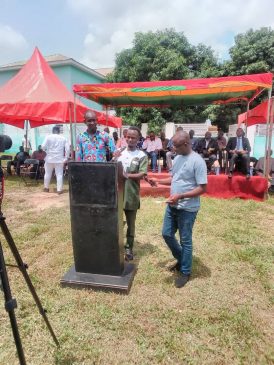
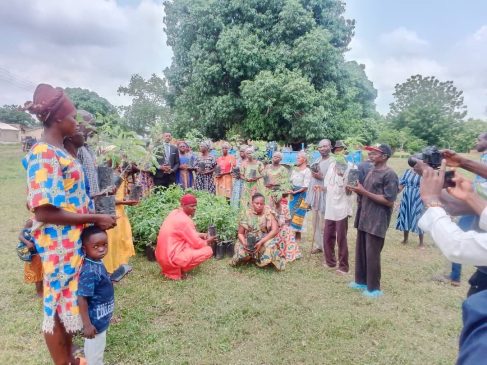 Baobab Aug 25 Launch at Babile,Tankyara grafted baobab seedlings distribution
At present, the farmers supported under the Joe-Bailor initiative are largely at the establishment and early vegetative-growth stage, since the major distribution programme in the Upper West Region commenced in 2025. The focus at this stage is on ensuring good field establishment, survival, proper agronomic management, protection from livestock and other threats, and maintaining the health and vigour of the grafted seedlings. We are therefore monitoring the farmers closely rather than prematurely describing the trees as mature.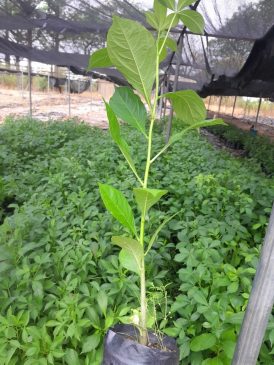
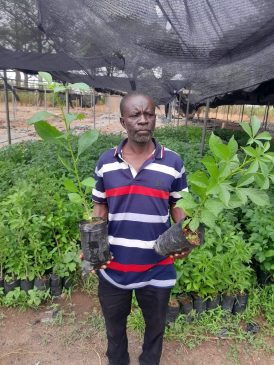
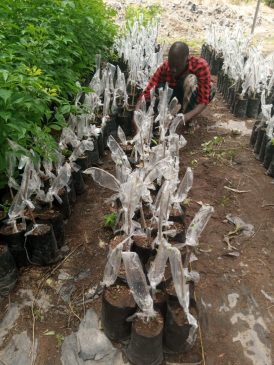
Baobab seedlings,Babile Agric Station,Mr.Dangana,Plant breeder-Joe-Bailor
Based on the research underpinning the early-fruiting grafted baobab technology, our expectation is that the first flowering could occur from around the second year under good management, followed by fruit development. Consequently, farmers who successfully established their seedlings in 2025 could begin seeing their maiden fruits around 2028, with 2028–2029 being a reasonable window for the first harvests. We are, however, treating this as an evidence-based projection rather than a guarantee, because actual fruiting will depend on the performance of individual trees and the quality of agronomic management.
Climate Change Impact Considerations
Que 4.: Do you perceive any climate change impact issues that could possibly constitute a challenge to the emerging baobab cultivation paradigm in the Upper West Region and the five Northern Regions as a whole? If yes, What Climate Smart Agricultural (CSA) practices are also being imparted to the farmers as mitigation and adaptation measures?
Ans.Yes, we recognise climate change as a potential challenge to the emerging baobab cultivation paradigm, although baobab is naturally one of the more climate-resilient tree species found in the savannah ecology. The key concern is not necessarily the mature baobab tree, but the young grafted seedlings during their establishment and early growth stages. Erratic rainfall, prolonged dry spells, rising temperatures, bushfires, soil degradation, flooding and uncontrolled livestock grazing could affect seedling survival and delay the trees from reaching their expected early-fruiting potential.
For this reason, Joe-Bailor NGO is approaching baobab cultivation as a climate-smart agroforestry intervention rather than simply a tree-planting exercise. Farmers are being encouraged to conserve soil moisture through mulching, adopt minimum or conservation tillage, improve soil organic matter through appropriate organic amendments, practise intercropping and cover cropping where suitable, and use rainwater harvesting and supplementary watering during critical dry periods. We are also emphasising fire prevention and firebreaks, protection of young trees from livestock, soil and water conservation, agroforestry and diversification, as well as the use of climate information to guide farm decisions. The objective is to ensure that the farmer does not merely plant a baobab tree, but establishes a resilient production system capable of surviving climate variability and producing fruit sustainably. This is particularly important because our ambition is to move from scattered individual trees to a commercially viable and climate-resilient baobab value chain across the Upper West Region and, ultimately, the wider five northern regions.
Wholistic Baobab Value Chain Considerations
Que 5. Granted the fact that, baobab products have long since been granted EU market access accreditation, as an NGO do you also have plans to support farmers to exports raw baobab products as well as support them to acquire processing and value addition for exports capacities so as to enable them maximize gains from their ventures like some South African companies are already doing?
Ans.Yes, absolutely. Our vision at Joe-Bailor NGO goes beyond supporting farmers to plant and harvest early-yielding baobab. We want farmers to participate meaningfully in the entire baobab value chain from production and aggregation to primary processing, value addition, certification, packaging and ultimately export. The existence of an established European market for baobab dried fruit pulp provides an important opportunity, but our objective is to ensure that Ghanaian farmers do not remain merely suppliers of raw materials while the greatest value is created elsewhere.
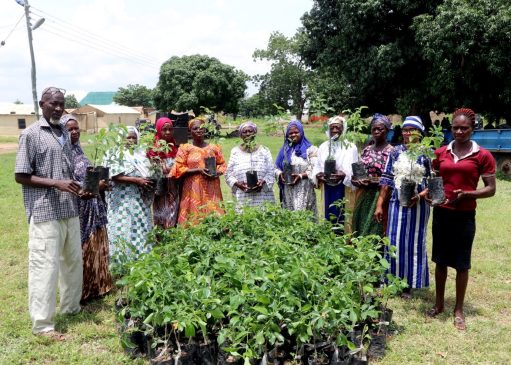
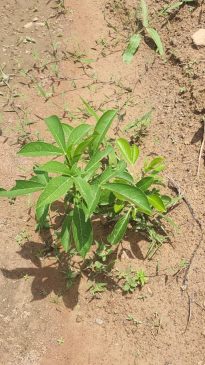
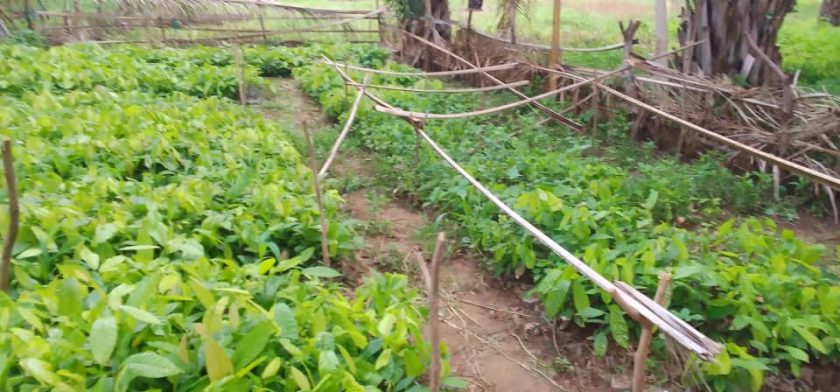
Joe-Bailor Grafted Baobab Seedlings(August,2025) Surviving grafted seedling at Babile
Our strategy is therefore to develop a phased model. In the initial stage, we will support farmers and cooperatives to produce quality-assured baobab fruit and establish efficient aggregation and traceability systems. We will then work with strategic partners to develop appropriate processing capacity for products such as dried baobab pulp and powder, baobab seed oil and other commercially viable derivatives. As production volumes increase, we intend to facilitate the acquisition of the necessary food-safety, organic and other market certifications, packaging standards and export compliance requirements, while connecting farmer organizations with international buyers. We will also explore partnerships with experienced processors, including companies that have successfully commercialized baobab in other African countries, so that Ghana can learn from existing models rather than starting from scratch.
Surviving grafted baobab seedling at Babile,Tankyara
Ultimately, our ambition is to move from a “farmer produces and sells raw fruit” model to a “farmer participates in a commercially integrated value chain” model. This should enable farmers, particularly women and young people, to capture a greater share of the value generated from their baobab ventures. We see the baobab programme not simply as an agroforestry project, but as the foundation for a new climate-resilient export-oriented industry in northern Ghana.
Plans for short maturity Locust Bean Trees(“dohi”)
Que 6.: Aside baobab, do you have plans to apply the grafting technology to come out with early yielding seedlings of other wild growing trees of socio-economic importance native to five Northern regions with particular reference to the Locust bean tree (Parkia biglobasa)? This is in view of the fact that, not only does the beans contain relatively higher plant protein from which “dawadawa” is made, but also, its rising popularity as a natural remedy for Blood Pressure (BP) among other things.
Ans.Yes. In fact, our long-term vision is not to stop at baobab. We see the early-yielding grafting technology as a potential platform for the domestication and commercialisation of a number of indigenous tree species of high nutritional, economic and ecological importance across the five northern regions. One of our strongest candidates is the African locust bean, Parkia biglobosa, popularly known as the dawadawa tree.
Parkia biglobosa is particularly attractive because it is already deeply embedded in the food and cultural economy of northern Ghana. Its seeds are processed into dawadawa, which is an important protein-rich traditional condiment, while the tree also has other food, environmental and traditional medicinal uses. Recent research from Ghana has confirmed the significant nutritional value of dawadawa, including substantial protein content. There is also scientific literature suggesting potential antihypertensive properties, although we would be careful not to promote it as a medical treatment without the necessary clinical evidence and regulatory approval.
Our intention, therefore, is to explore whether the same principle of selecting superior mother trees and using appropriate vegetative propagation techniques can be applied to Parkia biglobosa. The objective would be to identify elite trees with desirable characteristics such as early fruiting, high pod and seed yield, superior seed quality, disease tolerance and good adaptation to the different agro-ecological conditions of northern Ghana, and then develop and test grafted planting materials from those superior genetic sources.
We would approach this scientifically and in partnership with relevant research institutions rather than simply assuming that the baobab technology can automatically be transferred to locust bean. The first phase would involve identification and characterisation of superior mother trees, collection of scion materials, propagation trials, establishment of demonstration plots and rigorous monitoring of graft success, growth, flowering and fruiting. If the trials confirm that grafting can substantially shorten the traditionally long juvenile period of Parkia biglobosa, we could then move towards large-scale multiplication and farmer distribution.
The Bigger Picture
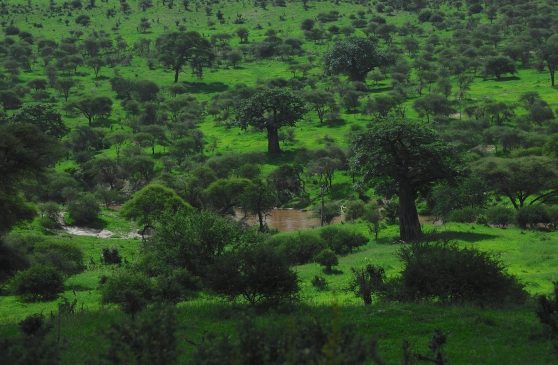
Joe-Bailor’s dream of a greener Savannah
In the longer term, our ambition is to develop a portfolio of early-yielding indigenous tree crops—including baobab, locust bean and potentially other species such as shea, tamarind, African mahogany and other economically important native trees. This would transform the programme from a single-species baobab project into a broader Indigenous Tree Domestication and Commercialisation Programme. Such an approach would simultaneously address food and nutrition security, climate resilience, biodiversity conservation, rural incomes and the development of new value chains for northern Ghana.